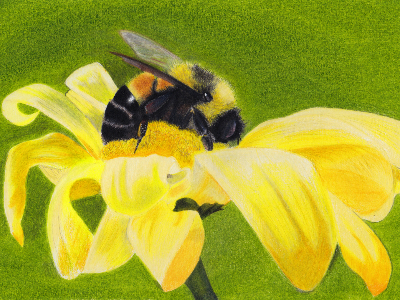
In May 2019, the Intergovernmental Science-Policy Platform on Biodiversity and Ecosystem Services (IPBES) concluded that biodiversity is declining at an alarming rate in many ecosystems across the globe. That loss of biological diversity includes pollinators—bees, butterflies, bats, and other animals that transfer pollen from one flowering plant to another, enabling the production of many of the fruits, vegetables, and seeds that we eat. According to the IPBES, 75 percent of the world’s food crops depend, at least in part, on animal pollinators. The US Fish & Wildlife Service estimates that the value of pollination services provided by insects in the United States alone is $3 billion.
We should preserve every scrap of biodiversity as priceless while we learn to use it and come to understand what it means to humanity.
E.O. Wilson, The Diversity of Life
Which pollinators are a conservation priority in PA?
In 2017, the rusty patched bumble bee was listed as an endangered species. This bee is an important pollinator for many crops, including blueberries and tomatoes. The number of monarch butterflies has declined significantly over the past 20 years in large part due to habitat loss. Among the monarch’s preferred food sources are various types of milkweed.
How can we help protect pollinators?
First, fill your garden with a mix of native plant species that flower during different times of the year to provide pollinators with food sources throughout spring, summer, and fall.
Second, avoid the use of pesticides and herbicides.
A healthy ecosystem will support pollinators as well as natural predators, like spiders and centipedes, that will help to reduce populations of pests.
What is Moravian College doing to help pollinators?
We have established a native plant garden that helps to support native pollinators in an urban setting. We have also set up two hives that contain European honeybee colonies. Although not native, these bees provide similar ecosystem services and offer a way to introduce students and other members of the community to pollinators. Finally, students help track observations of pollinators using citizen science applications like iNaturalist. You can help, too!