
Guest Lecture
Jean-Pierre Lalande
Professor of French,
Associate Member of the Department of Political Science
Breaking Down Brexit
Though Parliament voted to block a no-deal Brexit, the October 31 deadline looms. Jean-Pierre Lalande, whose research includes the politics of the European Union, provides an overview.
When large numbers of refugees started to arrive from Syria and Libya, the UK government reached a tipping point.
Jean-Pierre Lalande
Mkan
Why does the United Kingdom want to leave the European Union?
Two reasons: sovereignty and, a more recent one, immigration. For decades, the United Kingdom (UK) has been distrustful of the efforts made by other European countries toward more cooperation and integration. The UK declined membership in the European Coal and Steel Community in 1952 and the European Economic Community (EEC) in 1957. Finally, in 1973 the UK joined the EEC but for economic reasons only. The timing proved unfortunate. Shortly thereafter, the energy crisis brought economic growth in the EEC to a halt. A disgruntled UK blamed the other member-states for seeking political integration and accused them of trying to create a superstate.
Throughout the 1980s and 1990s, as the EEC expanded to the European Community (EC) and then the European Union (EU), fear of immigration fueled growing hostility among the British toward the EU. With the 2004 enlargement of the EU to 10 central and eastern European countries and the global economic recession of 2007, Britain saw 200,000 immigrants a year, up to 300,000 by 2010, and blamed the EU and Brussels for doing nothing to curb the flow. When large numbers of refugees started to arrive from Syria and Libya, the UK government reached a tipping point, and the 2016 Referendum on EU membership was called.
What will it mean for the UK to no longer be part of the EU?
No member-state has ever decided to leave the Union, so we don’t know. It also depends on whether a deal can be worked out between the UK and the EU and what kind of deal.
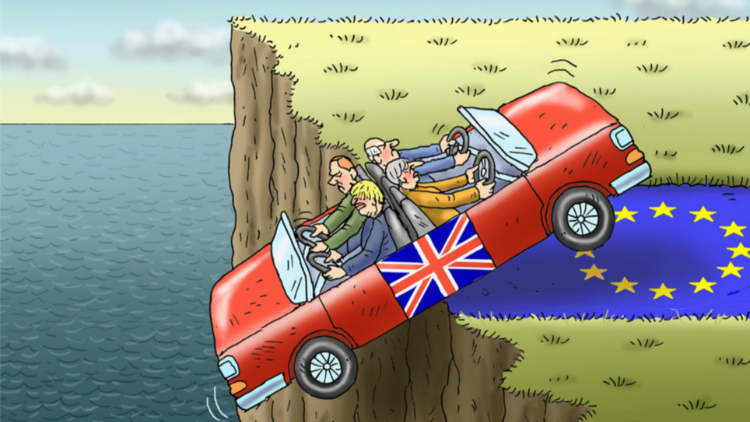
What is the bigger concern should the UK “crash out” of the EU?
Here again, there is no precedent. What is sure is that there are many questions: What will happen to the rights of the few million citizens of the EU living and working in the UK and the citizens of the UK living and working in other countries of the EU? What will happen to the economies of Northern Ireland and the Republic of Ireland? The UK will lose its access to important trading partners—with what consequences? The British will also have to renegotiate all the treaties they have been part of as members of the EU; since their financial sector is so important, this will most likely cause disruption. To what extent and how much might that impact the British economy? The list goes on …