
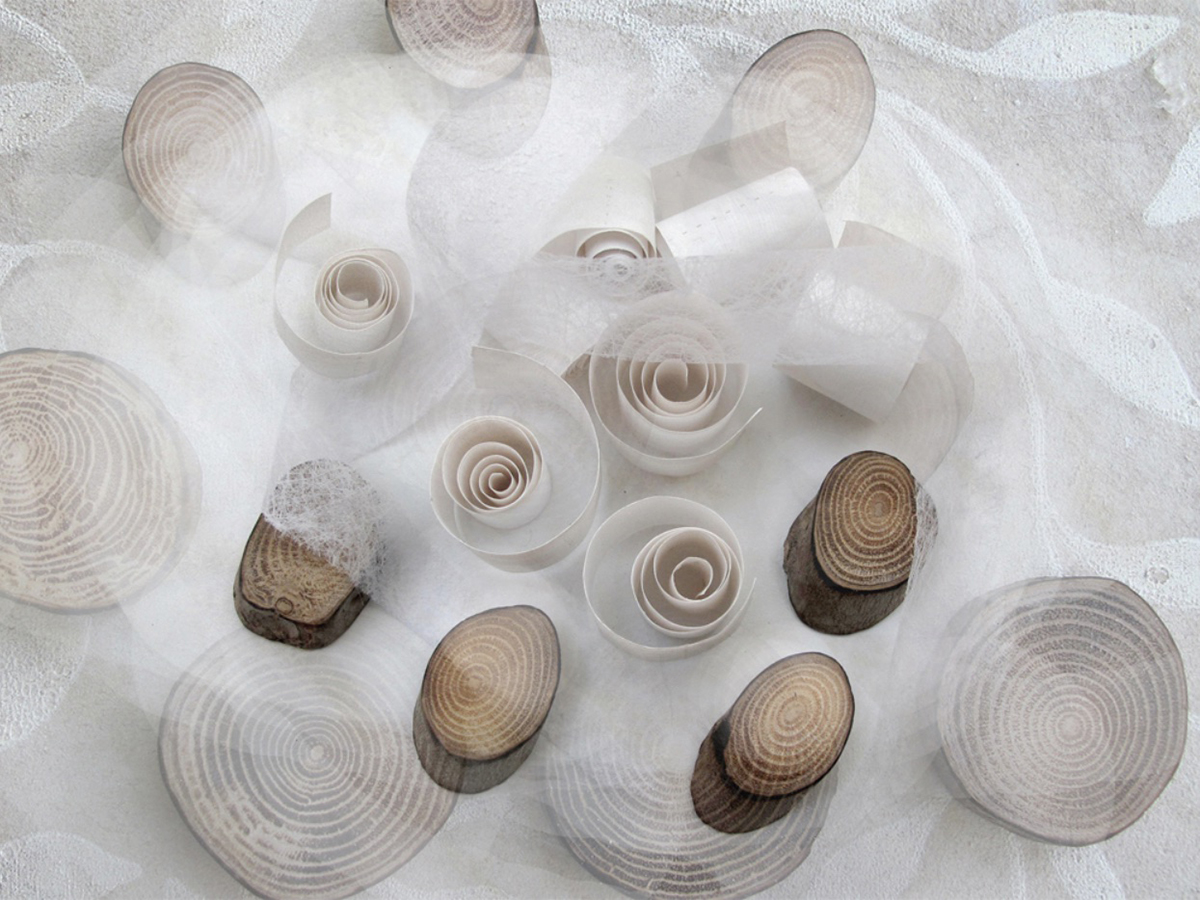
 Illustration by Alexa Grace
A writer’s journal
A Maine Life
Into the Woods
When I was a kid, my parents took me to a movie. It was set in the evergreen-saturated Northwest. All I remember of it now are the trees, Douglas firs probably. Huge, stately, awesome in their grandeur. So began a lifelong love affair with evergreens. In winter, they are green against the frigid whiteness. A dry harbor against snow and rain. A fragrant haven. Fallen pine needles make the forest floor a soft carpet, almost eerie in its silence.
When I moved northeast to Maine, the Pine Tree State (and the polar opposite of the Northwest), I picked a home surrounded by evergreens: spruces, hemlocks and balsams, larch, an occasional cedar, and many soft-needled white pines. Three oaks mark the property line, and some sugar maples, hardwood aliens in the evergreen forest, hang on the edges. For my first few years here, the evergreens and I happily coexisted. Waking up on a cool morning and inhaling that omnipresent scent made for a great start to any day. The first snow of winter, usually just in time for Thanksgiving, would frost and weigh down the tips of the trees, making the woods seem impenetrable. Hemlocks, in particular, resemble giant Christmas trees. A family of cardinals resides year-round in one of them, the male a scarlet ornament against the frost.
But love affairs do have their bumpy times, and so it is with the evergreens and me. The soil in my part of Maine, an amalgam of clay and rocks, isn’t very hospitable to plants and trees. And instead of taproots that bore down into the earth, evergreens throw out their roots just under the surface. My riding mower scalps their roots early in the spring when the frost heaves them closer to the surface. I manage to trip over one nearly every day.
I have also discovered that evergreens aren’t particularly robust. A few winters ago, a blizzard knocked out my power and phone for three weeks and decapitated the spruces at just about their necklines. When spring finally arrived that year, the spruces stood bare and lifeless. Come the next big storm, they’ll be felled by the wind.
Evergreens also are prime targets for all sorts of insect predators, and this past summer was a banner year for bugs—the major culprit being the pine borer, which has destroyed large swathes of our forests, and ants, which hollow out a tree’s innards. Both have certainly done a job on mine. Some of the largest trees break in half in a windstorm, revealing an empty core. Their absence fills the forest with shafts of light, sunlit patches where tiny sprouts of balsam and white pine quickly take over. An errant step squashes them.
But I have to walk carefully anyway. I got into a nasty argument with an extension ladder some years ago, and I lost big time. Now I must warily hobble more than purposely stride, and those protruding roots seem like trip wires. The evergreen forests here aren’t made for strolling anyway. They are dense and tangled with deadfalls, fallen limbs, and all those roots. I walk carefully and slowly, gawking at all this life struggling to exist.
Then came the pandemic, the toilet paper crunch, and the loggers.
Seven days a week for months, the roar of chainsaws, skidders, loaders, and logging trucks drowned out my quiet life.
Behind my land is a 900-acre tract. Until last year, it was a refuge for wildlife and sat untouched, overgrown with pulp trees. Then came the pandemic, the toilet paper crunch, and the loggers. Seven days a week for months, the roar of chain saws, skidders, loaders, and logging trucks drowned out my quiet life. Crossing the road to my mailbox became a daily adventure— the truckers get paid by the load, so they are unmoved by speed limits or pedestrians. Getting the pulp logs to the paper mill fast and getting back for more ASAP is the rule, not the exception.
Forestry and paper are major economic forces here and have been for centuries, so predominant that there is little old-growth forest to be found. On my first trip here in 1961, the forests seemed endless. But as the years went by and my trips became annual events, I saw more and more swathes of open ground, almost all resembling battlefields after the war has ended—desolate and barren at first, then choked with weeds. Loggers had stripped these tracts bare and moved on. Clear-cutting, as the practice is known, denudes the forests, inflicts enormous changes on wildlife, none very beneficial, and damages the environment in myriad other ways. Generations pass before clear-cut areas recover.
The back of my land is boggy, and the trees there are stunted. Behind that is a low ridge. One early-spring morning when the loggers’ racket woke me, I walked to the forest’s edge and was able to see the ridge, maybe 500 feet away. As I watched, the top of it suddenly was washed in sunlight as trees fell. How many I couldn’t tell. Later that same day, a truck passed with more than 100 tree trunks, all over 30 feet long, headed for the paper mill nearby. And every day for the rest of the season, until bad weather curtailed operations, the trucks passed with their loads and the forest dwindled. Maybe 100 acres’ worth of trees, maybe more. Lots of Charmin.
These loggers did avoid clear-cutting, and they will hopefully be back to plant seedlings in orderly rows so their next harvest will be easier on men and machines. That forest will be as attractive and welcoming as an Iowa cornfield. But it will at least be a kind of forest, a haven for moose and deer to graze peacefully and for Mother Nature to start her eternal reclamation project anew.
My father wasn’t religious, but he was deeply spiritual. And he worshiped trees of all varieties. It is a belief I share. He would sit on a lawn chair, cigar in one hand, coffee mug in the other, and stare with what I considered reverence at a huge tree that dominated our back field. It was a centuries-old oak, and he loved it. In spring and summer, in autumn and winter, it stood. It prevailed. It meant life to him.
Dad, raised a Catholic until a nun rapped his knuckles with a ruler once too often, worshiped that oak and two magnificent blue spruces that guarded the front of the house and two red maples that shaded the lawn. One summer day we were together, the end of his life coming sooner than we knew. He said, watching the oak wave its cloak of leaves in a gentle breeze, “There is more of God in a tree than anything man has ever created.” My forest is my church, as the oak was his.
A year later he was dead. I scattered his ashes among the oak’s roots. It seemed fitting.
—Ron dePaolo ’64
Penobscot, Maine