
Guest Lecture
Where have all the workers gone?
The United States is experiencing perplexing labor shortages often referred to as the “great resignation.” The suffering and isolation caused by the pandemic gets a lot of the blame, yet the shortages are better explained by longer-term changes in demographics, technology, and government policy.
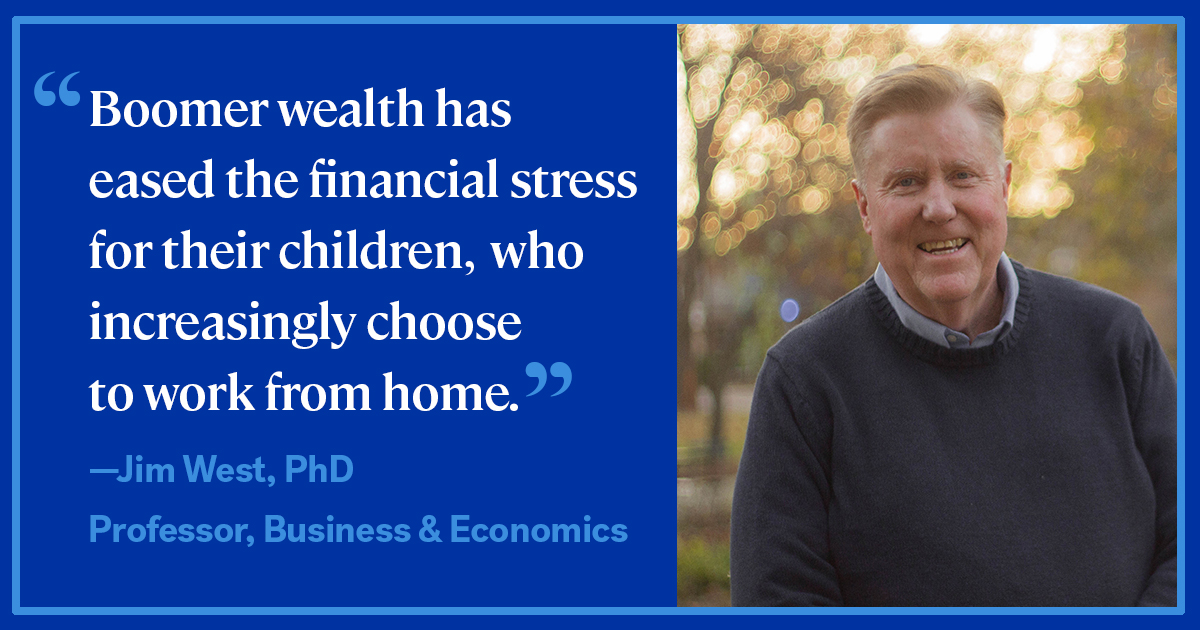
First, many baby boomers have enjoyed strong income and asset growth over the past four decades driven by two-income households, booming investment funds—e.g., 401(k)s—and real estate appreciation. This led many to reevaluate their career and life plans during the pandemic. They increasingly conclude they’ve had enough of work and are choosing earlier retirement. Boomer wealth has also eased the financial stress for their children, who increasingly choose work-from-home, gig-economy jobs.
Other demographic drivers of the labor shortages reflect population growth rates at or below replacement levels. Many young people today are marrying later, if at all, and weighing critically the opportunity costs of having many, or even any, children.
The status of immigrant labor coming to the United States, curtailed by the virus, also unveils a longer-term trend. Economic growth opportunities available in the home countries of potential immigrants are reducing the flow of needed workers to the United States.
Massive government spending programs contribute to labor shortages. While increasing consumption, welfare spending also leads workers to find taking a job costly as they may lose benefits. Likewise, policies suspending enforcement of contracts like student loans, mortgages, and rental agreements disincentivize job seekers. Deficit spending, monetized by a compliant central bank, increases inflation, driving wages and interest rates higher to a point where businesses, especially small ones, cannot compete for workers. Small business closures abound. Growing debt also drives higher taxes, further discouraging growth.
The rapid technological change of recent decades creates and destroys jobs. A workforce can realign only so fast as technological change exposes the gap between skill sets and job openings. Where once it was cheap labor that threatened jobs, now it is also the rise of the robot class.
Lastly, a revised view of the opportunity cost of two working parents matched against the unavailability of low-cost childcare and the uneven quality of schools is also being reevaluated by parents. Many are choosing home schooling and becoming stay-at-home moms and dads, prioritizing family over work.
While the postpandemic labor participation rate has been slowly improving, it is now complicated by high inflation, rising interest rates, and the threat of recession. In addition, we will continue to face the long-term technological and demographic factors discussed above. Economists everywhere are asking what can be done.
Many see the “creative destruction” of a free enterprise system as the best option. This process encourages entrepreneurial free markets with a smaller, less-expensive, decentralized government and a limited welfare safety net. The alternative, favored by others, sees more centralized economic power as a quicker and less disruptive solution. This divergence of views presents a great challenge and opportunity for university educators and students.