
Healing Minds
James Coupe ’98 helps heal the emotional damage caused by COVID, offering strategies that can lift us out of depression or anxiety and replace unhealthy coping behaviors with actions that bring calm, renewed energy, and even happiness during these turbulent times.
By Elizabeth Shimer Bowers
March 12, 2020: A trip to the grocery store revealed empty shelves and long lines. Shoppers shuffled around in a daze, avoiding eye contact, some masked, some not, and some with shirt collars or scarves pulled over their noses and mouths. That night, we heard that celebrities Tom Hanks and his wife, Rita Wilson, were hospitalized with the coronavirus. The next morning, schools and offices closed. It seemed like the world as we knew it was coming to an end, and in some ways it was.
Since COVID struck more than nine months ago, countless heroic healthcare providers have put their lives on the line to preserve patients’ physical health. Behind the scenes, a different type of hero has been doing equally important work in the name of emotional health. One such provider is psychologist James Coupe ’98.
“Most people have suffered some level of emotional distress as a result of the pandemic,” says Coupe, who splits time between his private practice and role as the clinical director of St. John Vianney Center, a residential center that helps clergy with mental health issues.
“Overnight, we went from the everyday freedoms we enjoy to virtual lockdown,” he says. We faced questions most of us have never encountered: What can I do to protect myself and my family? Should I rush out to buy canned goods and toilet paper? Which facts about the virus can I trust? When will life be back to normal? And we were forced to ponder these heavy questions all at once.
When Distress Turns Serious
As we all deal with some level of emotional distress, we need to be on the lookout for signs of serious mental health problems in ourselves, our friends, and our loved ones. Watch for these indicators:
- Expressing a negative outlook on life
- Losing interest in things a person would typically enjoy
- A low mood that affects the person’s ability to function in work and relationships
- Appetite changes, either increased or decreased
- Wanting to stay in bed, lethargy
- Increased substance use
- Irritability
- Comments about suicide (this is a major red flag)
If you notice any of these signs in a friend or loved one, offer the person support and let him or her know you care. “Don’t pepper them with advice or minimize what they are going through with comments like ‘don’t worry about it, everything will be fine,’ which can be invalidating,” says psychologist James Coupe ’98. “And if you’re concerned about suicide, call your family doctor or dial 911 right away.”
Nine months in, there are still many unknowns, so it’s no wonder there’s still plenty of emotional distress, too. “In some, this distress manifests as anxiety and depression and unhealthy coping mechanisms, such as drinking and drugs; overeating and gambling; and, in severe cases, suicide,” Coupe says. As the situation drags on and distress deepens, the need for mental healthcare professionals like Coupe grows. As such, Coupe has continued to work diligently, albeit sometimes via telehealth, to help his patients stay emotionally well. Under the umbrella of pandemic-related distress, Coupe says, he’s seen many different scenarios, a recurring one being young adults or college students moving in with their parents.
“Grown siblings in their 20s are suddenly living in the same house again, navigating each other like they did when they were teenagers, which leads to all kinds of interpersonal problems,” he says. “Different views about science, politics, and lifestyle habits create lots of stress, tension, and arguments, fueled by displaced anger and frustration about the pandemic itself.”
In families with younger children, questions arise about whether to allow in-person school, sports, birthday parties, inside playdates—all of which create endless moral and social dilemmas, Coupe says. Not to mention the ultimate overarching quandary: At the end of the day, what’s more important—our physical or emotional health?
The answer is neither, but Coupe notes that so far, the research shows that more people are worried about their mental health than their physical health in the face of the pandemic. “Personally, I think we need to take some degree of risk to physical health for the sake of mental health because socialization is part of our basic human needs. But you should do it wisely,” Coupe says. The level of “reasonable risk” varies depending on a person’s vulnerability to COVID-19. No matter what, if we get together with others, we should all practice social distancing, wear a mask, and gather outdoors whenever possible.
In addition to taking calculated risks, we all need to try to find moments of happiness, Coupe says. In truth, for all the opportunities the pandemic has taken away, it’s also presented a few. “In my house, for example, we went from running from one activity to the next to actually being able to sit down and enjoy dinner as a family for the first time in a while, which was wonderful,” he says.
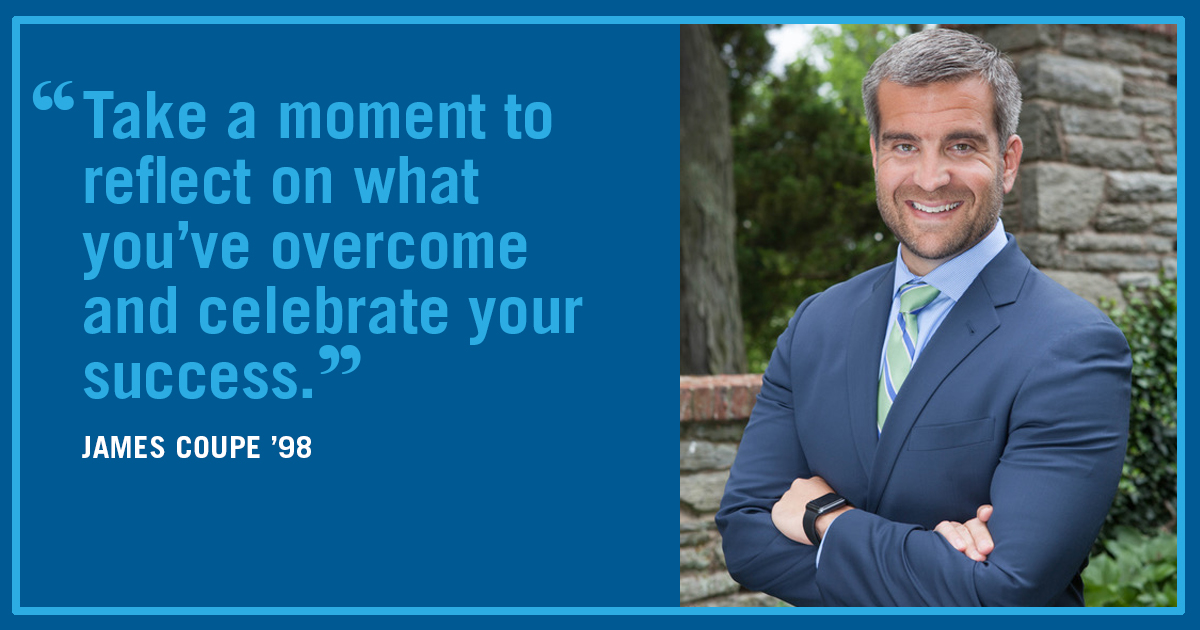
As we continue to navigate the new normal in these unprecedented times, Coupe encourages us all to give ourselves a pat on the back for the resilience we’ve shown so far. “I’ve seen so many people do amazing things,” he says. “So take a moment to reflect on what you’ve overcome and celebrate your strength; it will give you confidence to know you’re ready to take on whatever is to come.”
Writer Elizabeth Shimer Bowers specializes in health and wellness. She has written for numerous publications and websites, including WebMD, Prevention, Yoga Journal, and HealthyWomen. She’s coauthor of Secrets of the World’s Healthiest People, which she wrote with her husband, Steve Bowers, DO.
Strategies for Mental Strength
To help bolster mental health as the pandemic rages on, psychologist James Coupe ’98 recommends the following tips to stay upbeat and find happiness:
Focus on the present. Mindfulness is so important in times of chaos. Do your best to be present in the moment; don’t waste time worrying about the future or dwelling on the past.
Stay active. Most of us had to adjust our exercise routines in some way in this post-COVID world. “Exercise is hugely important for stress relief; when the gyms closed, many of us lost our exercise routines when we needed them the most,” Coupe says. You may have to do it differently than you did before—run or take walks outside or sign up for an online class—but he recommends you get some form of physical activity. Try to work out first thing in the morning so you can fit the activity in and enjoy the benefits for the rest of the day, he says.
Take one step at a time. When we look forward and see months, possibly years, of the pandemic ahead, we can feel overwhelmed and depressed. So instead, take it one week, one day, or even one meal at a time. Looking at life this way helps sharpen your focus on the things you have control over and keeps you motivated.
Set personal goals. When you achieve a goal, you feel good about yourself. Stay productive without putting too much pressure on yourself to move mountains. Try a new recipe, clean out a closet, or paint a room in your house.
Nurture the things you can control. With so many things out of our control, it’s important to focus on what we can control. Think, I can exercise today. I can make sure I get enough sleep, and I can help my kids with their schoolwork. And maybe I can do some gardening, read a book, or do another activity I enjoy.
Pick positive friends. Socialize with the people who make you feel good. “Friends who make you feel nervous or anxious—the Debbie Downers—can beget negativity, so I wouldn’t spend a robust amount of time with them,” says Coupe. Spend time with those who make you smile.