Navigating the New Normal
How our family is steering a strong course through the pandemic
By Dave Nocek ’98
My wife, Kara, and I are both 1998 Moravian College grads. We have two boys. Cole is 14 years old and a 9th-grader at Lower Merion High School. Jack is 10 years old and a 4th-grader at Penn Wynne Elementary. Pre-COVID, we had
a pretty normal and very active family life. A usual day consisted of early morning wake-up, coffee, workout, go to work/school, hurry home to get to practices, games, karate, baseball, basketball, football, etc. At bedtime, fall asleep immediately; then wake up and repeat. Kara worked at a local not-for-profit organization as a development manager, and I am the head of human resources for a global specialty chemical company headquartered in Wilmington, Delaware.
I’ll be honest. When the pandemic first hit and everything was shutting down, I was certainly worried for obvious reasons but also secretly thrilled. It meant a break from the chaos of life as we knew it. My office was shut down, kids sent home from school, no sports, no activities. I thought, If we can stay safe, this could be awesome.
I quickly found out I was wrong.
Soon after being home, the reality of the situation began to set in: remote work, remote school, low motivation, boredom, frustration, sleeping through virtual classes, the health concerns associated with the virus, and watching the news 24/7. Getting organized and establishing a routine became important. We did a decent job of it. Though we certainly had our challenges—jockeying for remote work/school spots, makeshift garage and outdoor offices, internet connectivity issues—we made it work. If I could only have a dollar for every time I heard, “Sorry, I’m having technical issues,” or “Sorry, I was on mute,” or, my personal favorite, “For some reason my camera isn’t working on Zoom.” Also I think our dog, Bolt, might officially be a 4th-grader for the number of times he’s shown up to virtual class. Ha!
Navigating through this pandemic has taught me that I’m wrong a lot and assumptions are just that—assumptions.
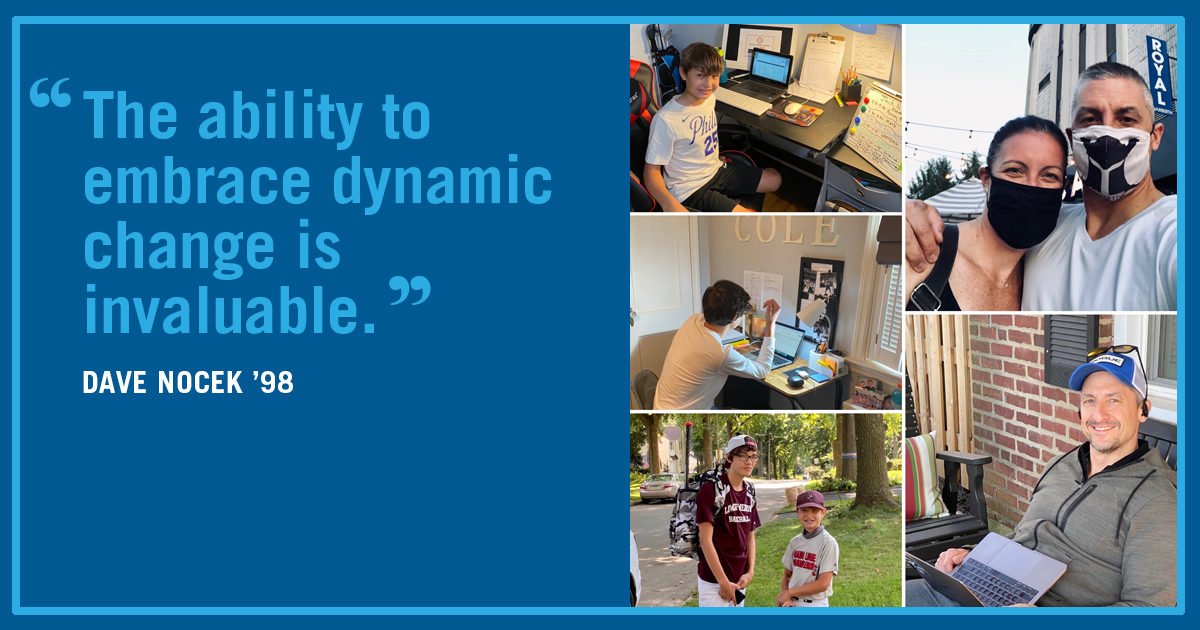
And the ability to embrace dynamic change is invaluable.
The company I work for is a water treatment and specialty paper (tissues, towels, etc.) chemical firm and was deemed essential, so 80 percent of our workforce never stopped working during the pandemic, and we brought many employees, including me, back to the office by early June. I thought returning to some normalcy would be great. Wrong again.
As the head of human resources, I am at the center of all the people issues. Returning to the office meant significantly stressed employees, pandemic-related issues to navigate, COVID tracking, and more.
Soon after my return to the office, life started to change on the home front. We had spent months believing we couldn’t resume any of our usual activities until a vaccine became available. Wrong. The boys returned to baseball with masks, no behind-the-plate umpires, no equipment sharing, disinfecting baseballs after each inning, and more. We figured out how to see family safely. We got back to our workouts and did a lot of hiking, biking, and camping. We even went on our usual summer vacation. It was different, certainly. More stressful. No dinners at restaurants. No indoor family gatherings. No maskless activities. But we did it all—or at least everything that was truly important to us. It wasn’t easy. We planned, prepped, bought more home workout gear, and improved our outdoor space for distanced get-togethers, among other modifications to improve our quality of life under the pandemic.
Navigating through this pandemic has taught me that I’m wrong a lot and assumptions are just that—assumptions. And the ability to embrace dynamic change is invaluable.
All in all, my family has been fortunate throughout this ordeal. We have our health, jobs, and a full life, even if it looks and feels a little different. Unfortunately, many cannot say the same. We’re taking nothing for granted and doing the best we can. I think that’s all anyone can really do in this COVID era.