
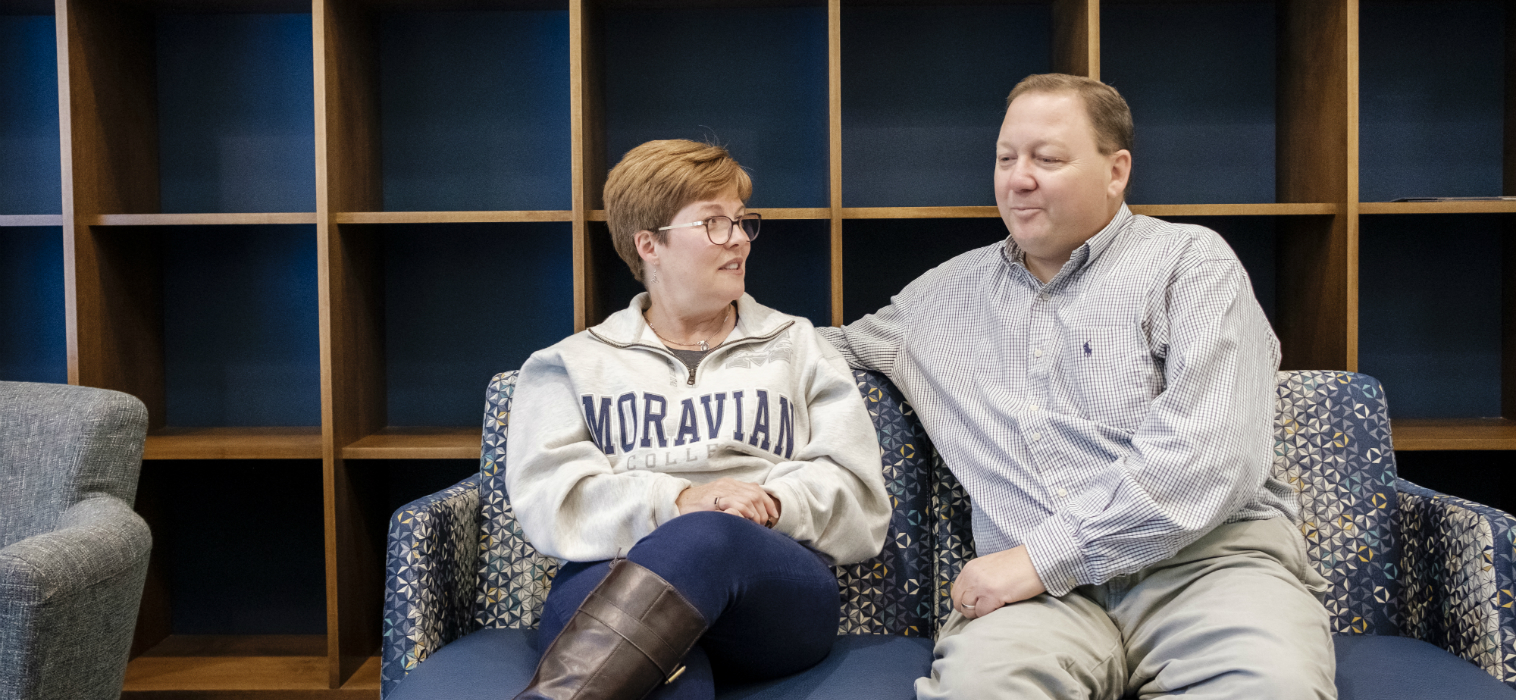
Photo credit Theo Anderson
Via Lucis:
Moravian Values Inspire Organ Donation
By Elizabeth Shimer Bowers
When Tracy Charben posted her message on Facebook in April 2018, it was a last resort: “Today, I realized that this beautiful man, the love of my life, is dying before my eyes.” Charben’s 49-year-old husband, Michael, had end-stage kidney failure from type 1 diabetes and was on dialysis 12 hours a day, seven days a week. “Maybe just maybe there is someone out there who can give this life-saving gift to Michael. If you are interested, call St. Barnabas Kidney Donation,” she wrote. She ended with, “thanks so much for passing this on.”
That message was passed along again and again, including by Molly Shaffer ’20. When it landed in front of Molly’s mother, Michele, she asked her daughter about it. “I learned that the Charbens’ daughter Julia was also a senior at Moravian. Molly said to me, ‘I don’t know her, but I shared the story because I couldn’t imagine not having my dad alive to see me graduate from college. Hopefully, someone will step up.’”
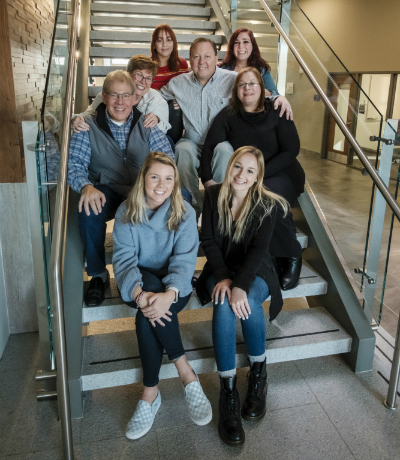
The Shaffer and Charben families gather to celebrate Michael
Charlene’s one-year kidneyversary. Front row, left to right: Molly
Shaffer ’20, Julia Charben ’20; second row: Steve Shaffer, Michele
Schaffer, Michael Charben, Traci Charben; third row: Hanna Charben,
Emma Charben (Photo credit: Theo Anderson)
That someone was Michele. “As I read the post, I cried,” Michele recalls. “I cried for Tracy because I could feel her love for her husband, and I heard her plea. And I cried for their three daughters. St. Barnabas is only 15 minutes from my house [in Livingston, New Jersey],” she says. She called and eventually learned she and Michael Charben were a perfect match.
In the period before the procedure, Michele attended a meeting with 17 other donors where they shared who would be receiving their kidneys: “my sister,” “my father,” “my brother-in-law.” Then came Michele’s turn. “I think he lives in South Brunswick? His daughter goes to college at Moravian with my daughter,” she said. “I’ve never met him.”
“I cried for Tracy because I could feel her love for her husband,
and I heard her plea.”
There was an audible gasp, she says. “Then one of the other donors asked me, ‘Why in the world would you do that?’”
To meet Michele is to understand. She’s a petite, spunky redhead who exudes a friendly warmth and goodness that makes you think, “This woman would do that.” But Michele gives credit to Moravian College. “I’ve seen so many positive changes in my daughter during her years at Moravian—stepping out of her comfort zone, being involved in things that mean something—and I love that,” she says.
“Moravian brought her out of her shell, instilled confidence in her, and helped her to look at what her purpose was going to be. I love following the college and reading the posts about volunteering, service, and being revolutionary. As a Hound parent, I just thought I should be doing the same thing. I’m not sure I would have been so revolutionary had it not been for Moravian.”
Michele donated her kidney and saved Michael’s life. In November, donor and recipient and their families met at Moravian to celebrate Michael’s one-year kidneyversary. He is still recovering but is doing well. There were hugs, flowers, tears, and memories shared between two families forever bonded by one woman’s selfless deed.
A Call for Living Donors
According to the National Kidney Foundation, more than 100,000 people in the United States are waiting for kidney transplants. The average wait for a kidney is 3.6 years, and 13 people die each day waiting. A kidney from a living donor extends the recipient’s life on average 8 to 12 years longer than a kidney from a donor who is deceased. For more information on kidney donation, go to donatelife.net.