
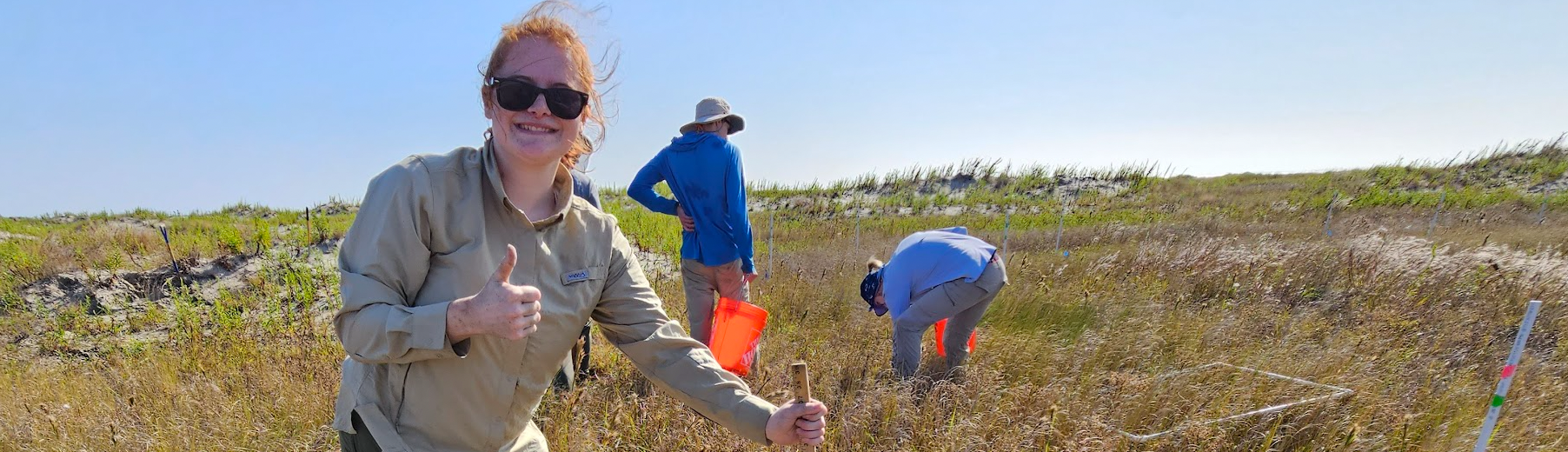
Undergraduate Research in Biology
Student research is a key part of the faculty's mission as educators and scientists. We support students conducting research not only in our course laboratories but also working with individual faculty mentors one-on-one in independent study projects and Honors thesis research. Since the University's senior Honors program began in 1960, the Department of Biological Sciences has had more than 100 students graduate with Honors — more than any other department at Moravian.
Science is a uniquely human activity and must be experienced in order to be truly understood and mastered. We are constantly looking for ways to incorporate more research experiences into our course labs and develop opportunities for Moravian students to engage in independent research. Developing research questions, devising experimental strategies to answer them, carrying out the necessary experiments at the bench or in the field, and confronting the inevitable obstacles that arise are all integral to becoming skilled biologists.
Can first-year students do research?
Yes! While research is mostly conducted by upper-level students, several students every year begin undergraduate research with a faculty member during their first year of college. Both SOAR program and faculty with research grants often take summer research students who just completed their first year of college.
How many Biology majors do research?
Approximately 30 Moravian Biology majors conduct undergraduate research with faculty each year, spread between SOAR (summer research), Honors, and Independent Research. Many of these students present their research at national scientific conferences and some even publish their work in scientific journals - these accomplishments are rare for primarily undergraduate institutions.
Student Research
Olfactory Learning and Memory of Bang-Sensitive Drosophila melanogaster
Natalie Herb '16 gathers information about mutant fruit flies that can be relevant to people that have epilepsy and other seizure disorders.

The Impact of Land Preservation on Water Quality in the Lehigh River
Shannon Bensetler '15 used both field and lab work to examine different sites on the Lehigh River watershed.

Succession Monitoring in Prescribed-burn and Control Plots at a Portion of the Restoration Area of the Palmerton Superfund Site
The Palmerton Superfund site, the largest contaminated site on the National Priorities List east of the Mississippi River, is being monitored for ongoing risks associated with the toxic heavy metals.
Faculty Research
United Nations Climate Change Conference
Diane Husic, accompanied by students and alumni, attended the UNFCCC in Paris. Follow the Moravian University blog from UNFCCC, selected among other top blogs by members of the Research and Independent NGOs and sent to over 500 research groups worldwide.