
Bridging Connections: Student Perceptions of Cross-Course Collaborative Projects
Supplemental Info for Poster presented at the
Annual Meeting of the Eastern Psychological Association, March 2022
Stacey B. Zaremba (zarembas@moravian.edu)
and Sarah K. Johnson (johnsons@moravian.edu)
Moravian University
Abstract
We examined the effectiveness of a collaborative assignment across two psychology seminars (on Music and Diversity). Paired across seminars, students developed a presentation that included sharing a piece of music, an overview of the related diversity topic, and music analysis themes. The Self-Assessed Collaboration Skills tool evaluated student attitudes toward the cross-class project and engagement level. We also assessed how examining a topic from different perspectives enhanced perceived learning of the course material.
Course Descriptions
Psychology of Diversity: We live in a world that is increasingly diverse. This course will focus on the psychological science of diversity with a central focus on the links between diversity and psychological processes at individual, interpersonal, and international levels. We don’t experience life through a single lens; rather, we experience many elements of our identity: gender, race, ethnicity, nationality, citizenship, disability, age, language, and religious, sexual orientation. We will examine the intersections of these elements. The seminar will investigate the psychological research on prejudice, discrimination and stereotyping and the effects and consequences of being part of marginalized groups.
Psychology of Music: Music is a ubiquitous part of the lives of most people in every society, but how well do you really understand how and why music impacts you? In this course we will explore a range of psychological perspectives on how music is processed and how it affects us. Through primary and secondary readings, we will discuss cognitive, social, emotional, and neurological facets of music. Specific topics may include music perception, the relationship between music and language, musical abilities in infants, creative thinking, stereotypes about music, the ways we use music to alter our emotions, and the cognitive neuroscience of music. Students will have an opportunity to pursue their own interests in greater depth with the final project, which can be an extensive literature review or an original empirical study. Most importantly, we will be exposed to lots of music and share music with each other over the semester.
Assignment instructions
(15% of final grade)
This assignment is a collaborative project between Dr. Johnson’s Seminar in Psychology of Music and Dr. Zaremba’s Psychology of Diversity seminar.
You will be paired with a student from the other seminar to analyze a song, an album or an artist that you select related to one of the following topics: Immigration, War, Feminism, Religion, LGBTQ+, Race, Disability, and Mental Illness. We will have two pairs for each of these topics; however, if you think of an additional category, we might be open to it--run it by us.
To be included in your presentation:
- Musical source reference & citations from class for relevant themes
- Lyrics (if any)
- Play a portion of the song (no more than 2 min)
- An overview of the diversity topic
- Tie-in with music analysis theme(s)
- Integration across diversity and music analysis themes is encouraged but not necessarily required.
- A reference slide for your citations
Presentations will be 10 minutes with 5 min for discussion. You will present together in person in ONE of the two seminar class periods as your schedules allow; otherwise, you will record your presentation for playing in one of the two class periods.
You will also turn in an outline (can be identical for both students) of the information to be covered in the presentation, with references listed, by the start of the class period you are presenting.
Grading will be focused on content and professionalism:
- Content: the incorporation of key themes from both classes, looking for accuracy of the information and depth of ties to the material.
- Professionalism: refers to the quality of the presentation both visually (e.g., not too much text/be concise, appropriate size fonts throughout, good selection of visuals, put together
Table of all topics and songs
| Topic | Song | Artist | Year |
| Disability | Set Fire to the Rain | Adele | 2011 |
| Feminism | Independent Women | Destiny's Child | 2001 |
| Feminism | God is a Woman | Ariane Grande | 2018 |
| Immigration | Running (Refugee Song) | Common & Gregory Porter | 2016 |
| LGBTQ+ | Bad Religion | Frank Ocean | 2012 |
| LGBTQ+ | HIM | Sam Smith | 2017 |
| LGBTQ+ | Take Me to Church | Hozier | 2013 |
| Mental illness | Overtired | Grace Young (MU student) | 2021 |
| Mental Illness | Fake Happy | Paramore | 2017 |
| Race | This is America | Childish Gambino (Donald Glover) | 2018 |
| Race | Freedom | Beyonce & Kendrick Lamar | 2016 |
| Religion | Superstition | Stevie Wonder | 1972 |
| Religion | Mary, Did You Know | Mark Lowry | 1984 |
| War | Blowin' in the Wind | Bob Dylan | 1963 |
Quotes in response to open-ended survey questions
How did the collaboration across seminars contribute to your learning of the material from your seminar?
“The collaboration required me to share the information I learned in my seminar so it really solidified my learning and showed me aspects of my knowledge that I was concrete in and needed more work.”
“This collaboration across seminars helped me to understand the messages that we are exposed to more subtly than say research articles or TedTalks (both of which are themselves great resources). It also helped to solidify the material regarding the impacts of diversity and intersectionality.”
“I think that the learning helped synthesize the material better. I was able to apply the concepts I learned on a larger scale.”
“ I suppose the collaboration across seminars technically allowed me to observe the way in which diversity topics directly affect the development of music to express the psychological impacts of said diversity issues.”
“I think that the collaborative nature of this assignment caused me to dig deeper into the material from my seminar because I wanted to be as in depth with the presentation as possible.”
“ It contributed to my learning of the seminar material because it allowed for the opportunity to share and partly teach my partner about what I was learning in order to provide context for their portion of the assignment.”
How did collaboration with someone who did not have knowledge of the same concepts help you to better understand those concepts from your own seminar?
“I had to share the information and teach it to them so it helped me conjoin ideas and outline the diversity topic.”
“Teaching them the material helped make sure I understood it.”
“It gave me a different perspective.”
“It was a learning experience; we were taught different concepts to relate to our own and teach each other our material.”
“I think it allowed me to figure out a way to discuss these topics in a way other than with people who already know about or have prior experience with the topic.”
“Explaining the information regarding diversity to my partner helped me gain a better understanding of what I have previously learned because teaching a peer about information helps myself understand it better.”
“It helped me because I was in a position to explain certain concepts which is always a great way to learn and study.”
“It helped me better understand the concepts because it put me in a position where I was explaining the course concepts in my own words colloquially to a peer.”
“Having to explain and summarize the topics we discussed in class was helpful in my understanding of them since I had to learn how to teach them.”
Are there any other comments you’d like to make about the experience of working collaboratively across the seminars?
“I really like this idea. I learn better when I can apply the material so this is something that appealed more to me. I wish that we did this more as an entire department.”
“I liked working across seminars as it allowed myself to have a different perspective on what I have already learned.”
“I enjoyed it and noticed how I was able to more clearly speak about course concepts during the presentation than I had anticipated I would be able to do by the end of the semester. My own personal understanding of both music and diversity and their intersectional pieces grew within only a few weeks.”
Anticipated changes if we did this collaborative assignment again
- In future we might coordinate the seminars to be at the same day/time to make collaborative work across the classes easier to accomplish.
- This would also allow for easier scheduling of the presentations during class time. We might require additional class times for presentations to provide room to expand the presentation times (in response to student suggestions).
- Having more time where the students can work together during the class period would also help with student concerns about partners not carrying their weight.
- We would do more direct discussion of examples in class before the project comes up, and we would make more room in our class topics to discuss all topics related to student projects.
- Students asked for more structure and clearer guidelines for the project, but providing more examples may serve the same purpose.
Supplemental Figures
Frequency distributions of the three key questions. We noted the bimodality in responses to the question about engagement (Fig. 3). Although there was a reasonable subset of “disagree” responses (25%), there was also a large proportion of responses in the “agree” range (71%). The responses on the other questions did not show this same bimodality.
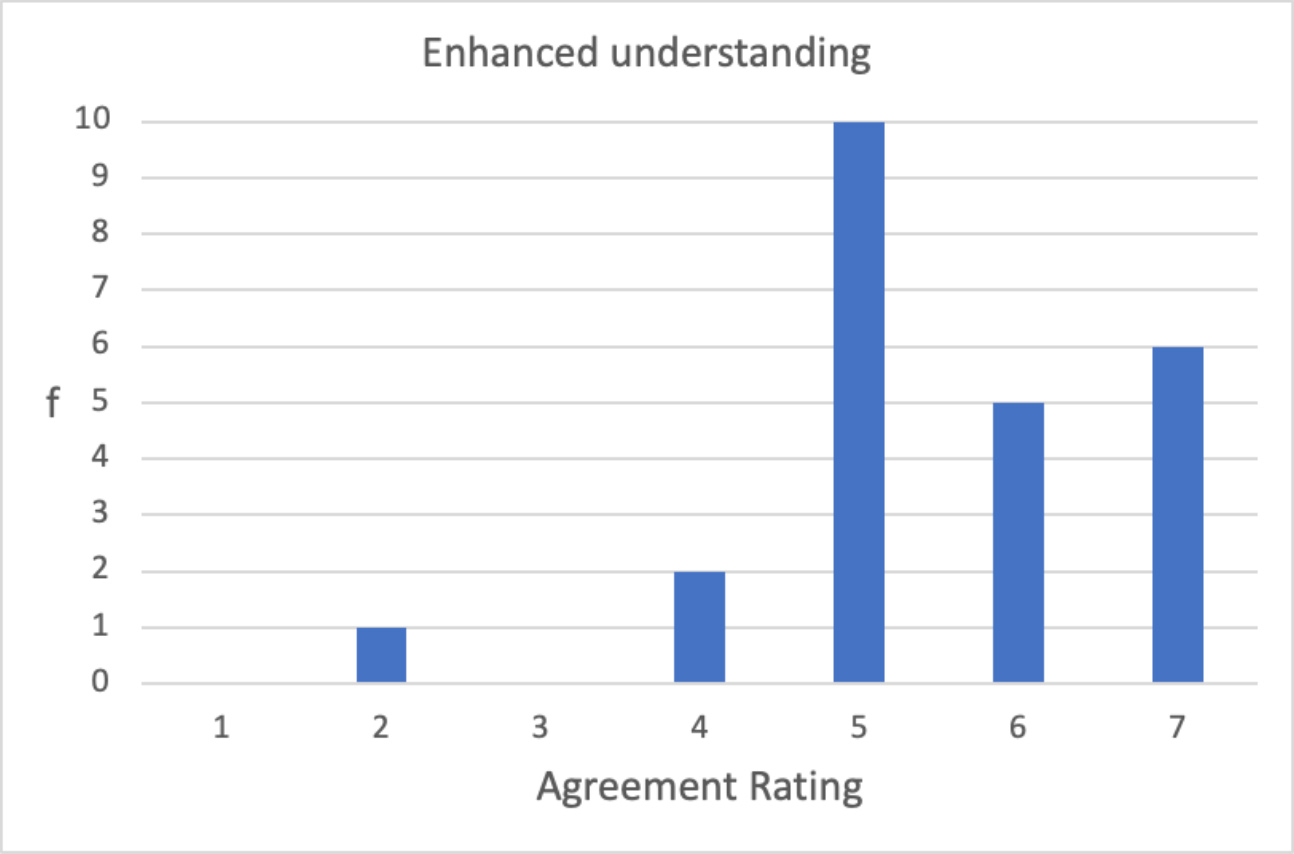
Figure 1. Distribution of responses to the survey question, “The project enhanced my understanding of my own seminar concepts.”
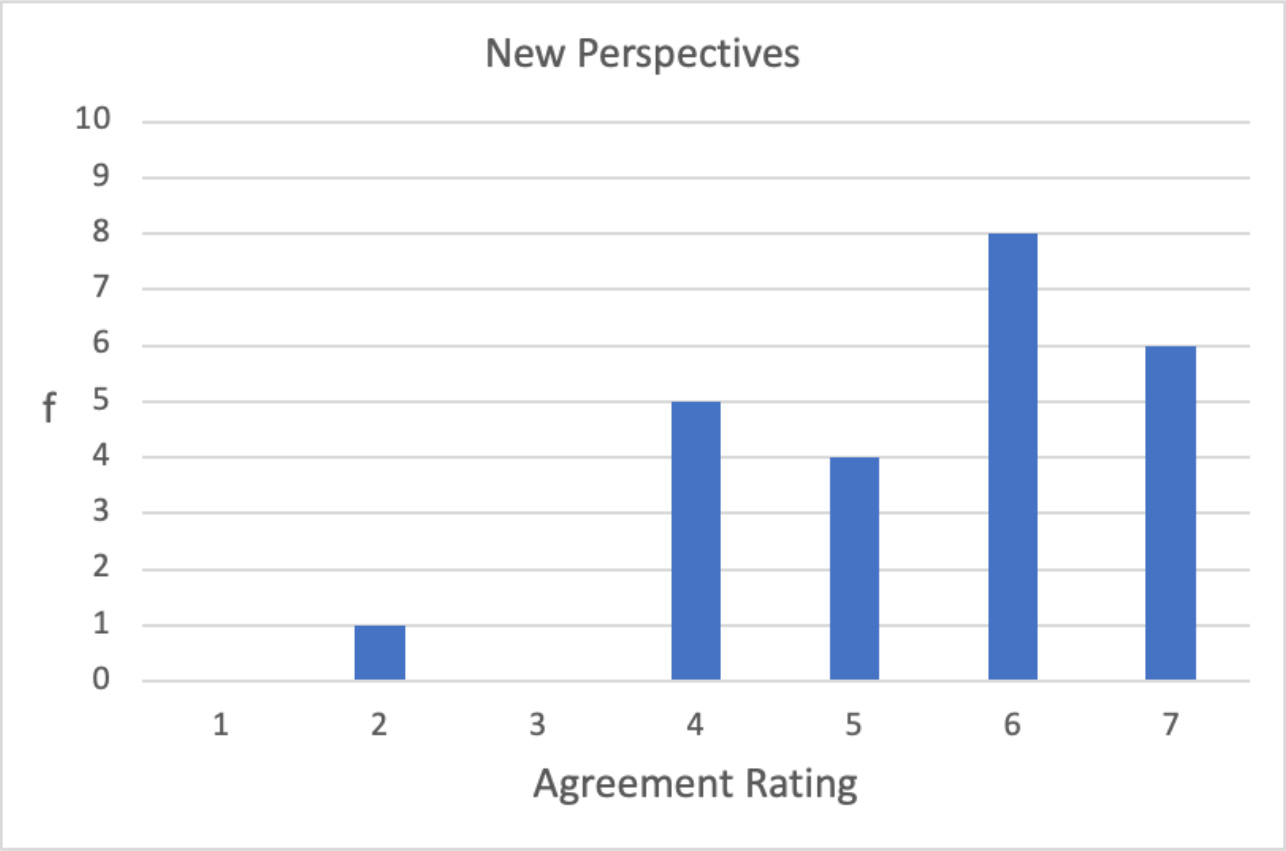
Figure 2. Distribution of responses to the survey question, “The project opened my eyes to new perspectives on my own seminar topic.”
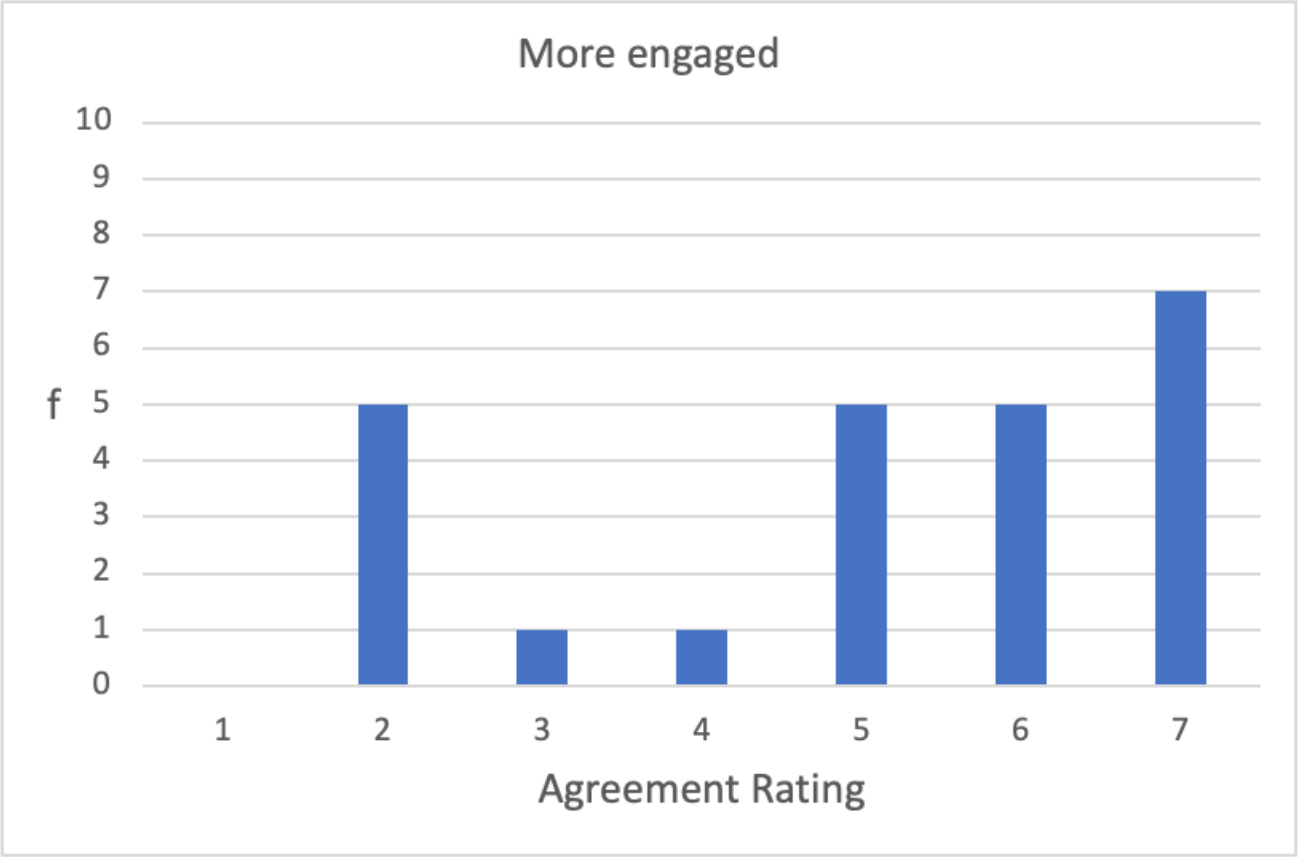
Figure 3. Distribution of responses to the survey question, “I felt more engaged because of the collaborative nature of the project.”