
Diane Husic Q&A
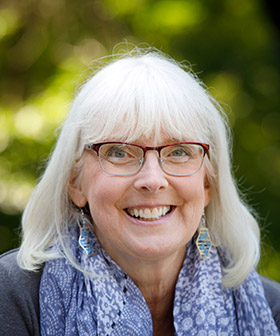
Diane White Husic, Dean, School of Natural and Health Sciences; Professor of Biology; Program Director of the Environmental Science and Studies Program
What is your role at Moravian University, and what drew you to this profession?
I first came to Moravian in 2004, as the new chair of biology and to teach in the then-new biochemistry and environmental science programs. I have always loved science and the outdoors. It is a privilege to share this passion with students by getting them out in nature during field trips and learning about and working to address environmental challenges such as climate change, water conservation, food security, and pollution. These issues also impact human health and well-being and the biodiversity in the natural world around us. Throughout my career, I have also had several opportunities to take on leadership roles on campus, in higher education organizations, and for local non-profits. In 2015, Moravian restructured into schools, and I became the founding dean for one of them. As dean, I have become a mentor and an advocate for faculty and relish the opportunity to help other faculty build new programs.
In what ways have you experienced philanthropic support from alumni and friends making a difference for Moravian and our students?
I know that much donor support goes specifically to scholarships (financial aid packages), which, of course, reduces students’ financial burden and makes it possible for some students to attend Moravian.
Louise A. & Marc E., PhD ’65 Freeman have made substantial contributions specifically to support science students' travel to enable them to present their research at national and international conferences. These experiences are such an important part of their professional growth. They are opportunities to gain feedback on their research and to network. A secondary benefit is that this frees up money from the Rokke Endowment (SOAR) to allow more students from disciplines outside of the sciences to travel to conferences too.
What would you say to supporters who have given to Moravian?
Moravian is a great institution offering a wide array of educational experiences for both undergraduate and graduate students. The contributions from donors are particularly important in enhancing these experiences - whether the donation is aimed at scholarships allowing needy students to be a part of this wonderful community with lower financial burden or for state-of-the-art buildings or equipment that facilitate interactive teaching and learning and enable student research. We are truly grateful for each of you that is able to pay it forward.
Please describe the highlights of your experience working for Moravian University.
The greatest highlight is working with students, whether that is in the classroom, doing research in the lab, or out in the field, and watching them develop their scientific skills and confidence. I have thoroughly enjoyed taking them to the U.N climate conferences in various countries. I also love wandering with them through the rainforests of Costa Rica when I teach that study away course. It has also been wonderful to work with the incredible faculty in biological sciences and to onboard all the new faculty in the rehab science programs.
What do you enjoy most about what you do?
In my role as dean, I particularly enjoy being an advocate for faculty and celebrating their accomplishments in the classroom and related to their research and community service. Likewise, I love watching and supporting students as they discover new things and pursue their dreams. Just today, I heard from an alumnus who shared his latest adventures and talked about how his experiences at Moravian led him to this point in his career.
Share something about yourself that people may not know.
I am a co-owner of a field station and about 500 acres of rainforest in Costa Rica. Not only do we have the opportunity to conserve valuable habitat and the biodiversity it serves, but we work closely with the local rural (and very poor) community to engage them in this process through education and employment. This is one of the sites that students in my class visit where they get to interact with community members, including local school children, to talk about the value of rainforests and biodiversity, and learn about a different culture.
Where is your favorite spot on campus?
I have two. I love walking the grounds on campus to be in awe of the magnificent trees and gardens. This can provide an important reset when I am stressed or tired. But I also love visiting Brethren's House and being in a place that holds such history. Before I worked at Moravian, my sons took music lessons there, and I would read the signs about the history of members of the Continental Congress being there and think, "Wow!”
What is your favorite Moravian tradition?
The summer events are associated with SOAR (Student Opportunities for Academic Research), during which students spend ten weeks working with faculty on creation and discovery, share their experiences in weekly seminars, and have social events. Related, I also enjoy the annual spring Student Scholars Day, which is a chance to celebrate the work of students and their faculty mentors.
What is your favorite thing to do when you are away from campus?
Spending time in nature birding, hiking, or taking photos.
What book, film, song, or piece of art has so touched you that you find it enduring/unforgettable?
I have a very large book collection and can not pick a favorite, so I will go with the "Taking Root" documentary about the Kenyan Nobel Peace Laureate, Wangari Maathai. I think the term "hero" is overused, but for me, she is one. If you do not know about her, please take a few minutes to read about her work and life story. I had the great privilege of meeting her in 2009.
Finish this sentence: I can never resist a good ______.
Dessert!
Who inspires you and why?
I am generally drawn to stories of strong, inspirational women like Wangari Maathai, Dian Fossey, Jane Goodall, Rosalie Edge, and others. But perhaps my biggest inspiration comes from Lake Superior. I grew up on the shores of this Great Lake, and its magnitude provides a sense of awe that is breathtaking and gives me a reason for the environmental/conservation work that I do.
What is the best advice you ever received?
To read and think about the book Academic Duty by Donald Kennedy. It talks about our responsibility (from a place of privilege) to reach "beyond the walls" of campus to make a positive difference in the larger community in which we reside.
Where did you go to college, and what did you study?
I went to Northern Michigan University for undergraduate studies in my hometown of Marquette, Michigan. There, I studied biochemistry. For my doctoral studies, I went to Michigan State University and studied biochemistry and, more specifically, the enzymes of photorespiration and anaerobic metabolism in unicellular algae. This work has interesting evolutionary aspects and connections to how photosynthetic organisms will adapt to climate change.